India Unveils Revolutionary Drone System To Boost Naval Defense Capabilities
The Indian Navy’s Foray into Drone Technology: Exploring the Feasibility of At-Sea Rearming …
02. March 2026
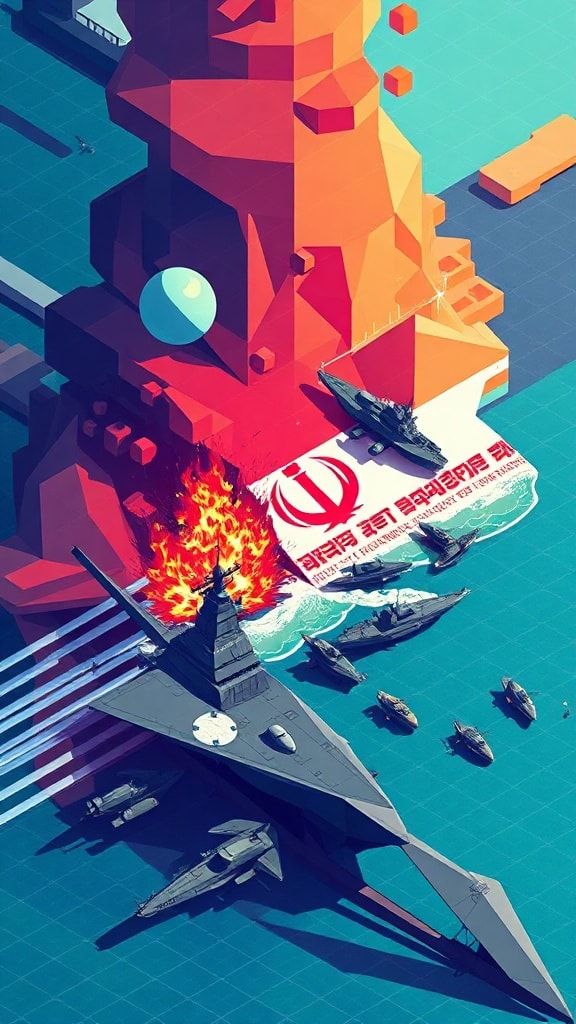
The United States has dealt a crushing blow to Iran’s naval capabilities with the confirmed sinking of multiple major vessels as part of the ongoing Operation Epic Fury campaign. The devastating strikes, which were carried out by the US military, have left Iran’s naval power projection capabilities in shambles.
At the forefront of the destruction was the Shahid Bagheri [1], Iran’s recently commissioned drone and helicopter carrier. The vessel, which had only entered service with the Islamic Revolutionary Guard Corps Navy on February 6, 2025, represented a significant investment in Iran’s naval modernization efforts.
Converted from a 240-meter container ship over two years, the 40,000-ton carrier featured a 180-meter ski-jump runway and could operate for up to a year at sea without refueling, according to Iranian naval officials. The USS Abraham Lincoln aircraft carrier was at the center of the controversy surrounding Operation Epic Fury, but CENTCOM denied claims that the carrier had been struck by missiles during the operation, stating that the projectiles “didn’t even come close” and that the carrier continues launching aircraft in support of the campaign.
However, President Trump stated on March 2 that ten Iranian ships had been “knocked out” during the operation. The destruction of the Shahid Bagheri was first reported by satellite imagery analysis, which revealed the vessel on fire at its berth in Bandar Abbas. Thick black smoke was visible over the central portion of the facility, indicating a catastrophic explosion or fire that destroyed the ship beyond repair.
The loss of this vessel is significant, as it marked a major milestone in Iran’s efforts to develop a robust naval capability. The IRIS Makran [2], Iran’s first forward base ship, was also struck during the operation. The Makran, originally a Japanese-built Aframax crude oil tanker completed in 2010, had been converted into a military vessel capable of supporting helicopter operations and serving as a mothership for special operations forces.
With a full-load displacement of approximately 121,000 tons, it was among the largest naval vessels operated by any regional navy. The Makran’s destruction is particularly notable, given its status as a forward base ship. This type of vessel is designed to serve as a mobile command center and provide logistical support for military operations in the region.
The loss of the Makran marks a significant setback for Iran’s ability to project power and conduct operations at sea. In addition to these major vessels, CENTCOM confirmed that the Jamaran-class corvette [3] had been sunk during the operation. The domestically-built surface combatant, displacing approximately 1,500 tons and measuring 95 meters in length, was armed with anti-ship missiles, surface-to-air missiles, and torpedo launchers.
Commercial satellite imagery showed smoke rising from the naval wharf at the Konarak Naval Base, where the frigate had been docked. The Jamaran-class forms the backbone of Iran’s surface fleet, with only six vessels completed prior to this loss. The destruction of these vessels represents a significant blow to Iran’s naval modernization efforts and further diminishes the operational capacity of the Islamic Republic’s navy.
Operation Epic Fury, launched on February 28 by the United States and Israel, has targeted Iran’s military infrastructure across multiple domains. The campaign’s stated objectives include eliminating Iran’s nuclear capabilities, destroying its ballistic missile arsenal, and degrading military assets. Initial strikes killed Supreme Leader Ali Khamenei and other senior officials, prompting Iranian retaliatory attacks against US military bases across the Gulf region and Israeli territory.
In response to these attacks, Iran’s Revolutionary Guards commander reportedly declared the Strait of Hormuz closed and threatened to fire upon passing ships, leading to an 85 percent reduction in maritime traffic through the strategic waterway. However, with the destruction of these major vessels, it appears that Iran’s efforts to close the Strait have been thwarted.
The loss of these vessels marks a significant setback for Iran’s naval modernization efforts and further diminishes the operational capacity of the Islamic Republic’s navy. The US military has dealt a devastating blow to Iran’s ability to project power at sea, and it remains to be seen how the Iranian regime will respond to this development.
As tensions between the US and Iran continue to escalate, it is clear that Operation Epic Fury represents a significant escalation in the conflict. The destruction of these major vessels serves as a reminder of the risks faced by regional players who engage with the United States in military operations. As the situation continues to unfold, one thing is certain: the consequences of this operation will be felt for a long time to come.
The impact of Operation Epic Fury will also be felt globally, as it has significant implications for regional stability and international trade. The destruction of major vessels in the Gulf region can have far-reaching consequences, including disruptions to global shipping lanes and potential escalation of conflict. As such, it is essential that all parties involved take a step back and assess the situation before proceeding further.
The US military’s actions in Operation Epic Fury represent a significant shift in the balance of power in the region. The destruction of these major vessels marks a major victory for the US, but also serves as a reminder of the risks faced by regional players who engage with the United States in military operations.
As the situation continues to unfold, it is essential that all parties involved take a step back and assess the situation before proceeding further. The consequences of this operation will be felt for a long time to come, and it remains to be seen how the Iranian regime will respond to this development.