Uavs Demand Reliable Fuel Flow Measurement For Safe Flight
The Importance of Fuel Flow Sensors in Unmanned Aerial Vehicles (UAVs) As the use of unmanned aerial …
13. May 2026
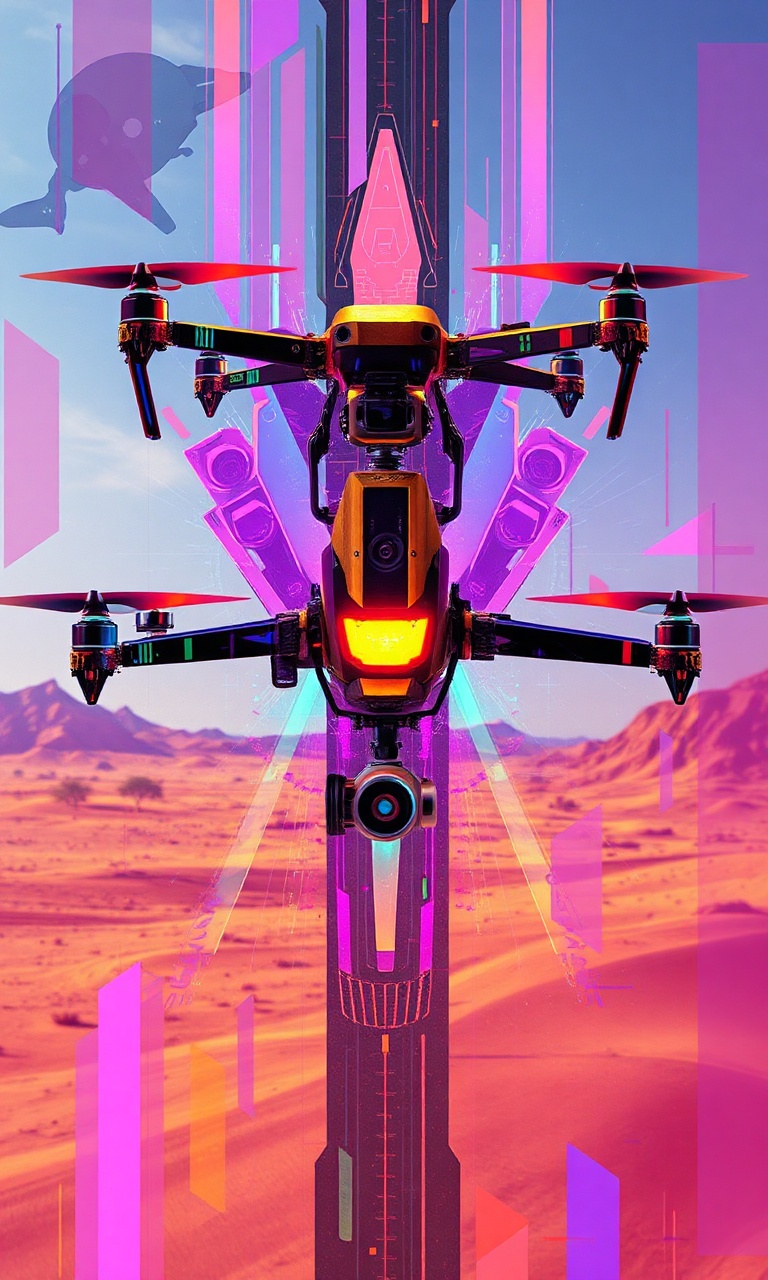
The US Army has deployed a new counter-drone system, the Bumblebee V1, as part of its efforts to combat the growing threat of unmanned aerial systems (UAS). The small FPV multirotor drone is capable of identifying and intercepting hostile drones, making it an effective tool in the fight against UAS.
The Bumblebee V1 was recently trained with soldiers from the 10th Mountain Division at Fort Drum, New York, as part of a session organized by Joint Interagency Task Force 401, the Department of War’s lead counter-drone organization. The system is already deployed in Ukraine and has been shown to be effective in various scenarios.
The Bumblebee V1 turns a drone into a drone killer through its core capability: physical interception. It identifies a hostile drone, closes the distance, and collides with it, resulting in both aircraft going down. This controlled crash is intentional and has proven effective in operational testing.
The system’s automated target recognition feature allows it to identify and track a hostile drone with limited operator input, offloading the tracking burden from the operator. This enables them to focus on maneuvering and situational awareness while the Bumblebee handles the intercept geometry. The platform has been confirmed to have an engagement range of approximately 985 yards and battery endurance of around 20-25 minutes depending on speed.
The Bumblebee V1 comes as a complete package, including battery, autonomy suite, FPV controls, ground station with antenna arrays, and command and control software integration. However, the system is classified as a munition, which shapes how it’s acquired, stored, and employed.
The Bumblebee V1 is more than just a counter-drone system; it’s a multirole fighter capable of short-range reconnaissance, ground and air threat detection, launched effects, one-way attack missions, and ordnance delivery. This range of roles from a single low-cost platform is the kind of flexibility that small units at the squad and platoon level have never had access to before.
During training with the 10th Mountain Division, Lt. Col. Max Ferguson described the system as a multirole fighter capable of short-range reconnaissance, ground and air threat detection, launched effects, one-way attack missions, and ordnance delivery. The platform’s flexibility is what sets it apart from other counter-drone systems on the market.
The Bumblebee V1 keeps soldiers out of fortified positions and bunkers where close-quarters clearing operations generate casualties, according to Spc. Cevyn Jay Paydy of the 4th Battalion, 31st Infantry Regiment. This flexibility changes the math for infantry units assaulting prepared positions.
The Bumblebee V1 has already proven its worth in Ukraine, and now it’s coming home. Joint Interagency Task Force 401 is fielding the upgraded V2, which adds a three-camera array with an improved gimbal, updated sensors, and a more capable automated target recognition system compared to the V1.
The V2 delivery schedule began in March, with deliveries scheduled for approximately $5.2 million. Brig. Gen. Matt Ross described the broader imperative of countering drones as both a battlefield and a homeland defense requirement.
The task force is building a layered counter-drone architecture that spans combat deployments, homeland infrastructure protection, and interagency coordination with Customs and Border Protection, the FBI, the DEA, and the FAA. The Bumblebee story is one of the more honest counter-drone acquisition stories the Army has told in years, highlighting the system’s low-cost, attritable, NDAA-compliant nature.
The multirole finding from 10th Mountain Division is significant as it accelerates the Army’s willingness to push autonomous capabilities further down the chain of command. When a specialist can launch a munition-class drone for reconnaissance, strike, or intercept from the squad level without waiting for approval from higher echelons, the tempo of small-unit warfare changes.
The gap between lesson and implementation is closing faster than ever before on this category of capability. This shift is genuinely significant and has far-reaching implications for the future of warfare.
In conclusion, the Bumblebee V1 is an effective counter-drone system that’s already proven its worth in Ukraine. Its multirole capabilities make it an attractive solution for small units at the squad and platoon level. The Army’s willingness to push autonomous capabilities further down the chain of command will have significant implications for the future of warfare.