08. January 2026
Hii Marks Major Progress With Next-Gen Maritime Defense Vessels
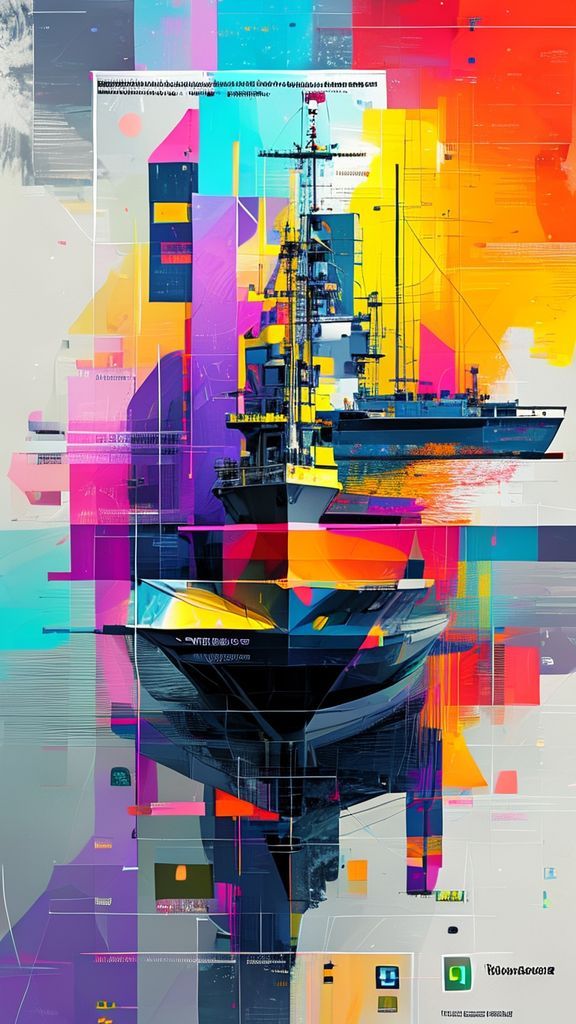
HII’s ROMULUS Unmanned Surface Vessel (USV) Family Makes Significant Progress, Milestone Reached at 30% Construction Completion
The maritime defense sector is witnessing a significant transformation with the development of advanced unmanned surface vessels. The ROMULUS USV family, designed by HII, has reached a crucial milestone in its construction process, marking a major achievement for the company.
According to recent reports, the prototype has completed 30% of its construction phase at the Breaux Brothers Enterprises shipyard in Louisiana. This progress review, attended by HII leaders and build partners from Breaux Brothers and Incat Crowther, provided an insight into the current state of hull construction, outfitting, and the integration of the Autonomous Control System (ACS), Odyssey.
The ROMULUS USV family boasts impressive technical specifications, including speeds exceeding 25 knots and an operational range of 2,500 nautical miles. The vessel’s modular design enables rapid production, making it an attractive option for the U.S. Navy, U.S. Marine Corps, and allied joint forces. By pairing ROMULUS with HII’s existing REMUS Unmanned Underwater Vehicles (UUVs), the company aims to provide a scalable dual-domain force package capable of supporting distributed maritime operations.
Andy Green, President of HII’s Mission Technologies division, expressed his satisfaction with the progress made so far. “ROMULUS is progressing at a pace that reflects the urgency of the mission and the strength of our partnerships. Breaux Brothers and our industry team are delivering a platform that brings scale, autonomy, and real operational advantage to the fleet.” The 30% completion milestone is a testament to the company’s commitment to meeting the demands of its customers.
The ROMULUS family of vessels is designed for high-endurance, sustained open-ocean autonomy. These platforms are engineered to meet the requirements of the U.S. Navy, U.S. Marine Corps, and allied joint forces, with applications in Intelligence, Surveillance, and Reconnaissance (ISR), Counter-UAS (C-UAS), mine countermeasures, and strike operations. Additionally, the vessels serve as motherships for the launch and recovery of Unmanned Underwater Vehicles (UUVs) and Unmanned Aerial Vehicles (UAVs).
The Odyssey ACS is a critical component of the ROMULUS vessel’s performance. This autonomy suite has been proven in over 35 USV platforms and more than 750 REMUS units globally. The system features an open-access, government-aligned architecture that allows for the rapid integration of third-party sensors and payloads. To enhance autonomous performance and lifecycle sustainment, the platform also incorporates integrated capabilities from Shield AI, Applied Intuition, and C3 AI.
The development of this technology is being supported by HII’s Dark Sea Labs Advanced Technology Group. A significant milestone was recently achieved in November, when HII and Shield AI successfully completed the first major test of their integrated autonomy solution aboard a ROMULUS 20 USV. This achievement moves the AI-enabled fleet closer to operational deployment.
The integration of advanced technologies like Odyssey ACS is crucial for the successful deployment of unmanned surface vessels. The success of this project can be attributed to the collaboration between HII, Breaux Brothers, and Incat Crowther, who are working together to bring a cutting-edge platform to market. The ROMULUS USV family has the potential to revolutionize the way naval forces operate, providing a scalable and repeatable solution for distributed maritime operations.
As the construction of the ROMULUS prototype continues, HII is committed to delivering a platform that brings scale, autonomy, and real operational advantage to the fleet. With its impressive technical specifications, modular design, and advanced autonomy capabilities, the ROMULUS USV family is poised to make a significant impact in the maritime defense sector.
The successful deployment of unmanned surface vessels will also depend on the development of robust autonomy systems like Odyssey ACS. This technology has the potential to transform the way naval forces operate, providing a scalable and repeatable solution for distributed maritime operations. As HII continues to push the boundaries of innovation, it’s essential to explore new technologies that can enhance operational capabilities.
The ROMULUS USV family is an exciting development in the world of unmanned surface vessels. With its impressive technical specifications, modular design, and advanced autonomy capabilities, this platform has the potential to revolutionize the way naval forces operate. As HII continues to deliver cutting-edge maritime defense solutions, it’s essential to explore innovative technologies that can enhance operational capabilities.
The milestone achieved by the ROMULUS prototype marks a crucial step towards delivering a scalable and repeatable solution for distributed maritime operations. With its advanced autonomy capabilities and modular design, the ROMULUS USV family is poised to make a significant impact in the maritime defense sector. As HII continues to refine and develop this technology, it’s essential to remain committed to meeting the demands of its customers and providing innovative solutions that can enhance operational capabilities.
HII’s commitment to delivering advanced maritime defense solutions has led to significant progress in the development of the ROMULUS USV family. The company’s partnership with Breaux Brothers and Incat Crowther has been instrumental in bringing this cutting-edge platform to market. With its impressive technical specifications, modular design, and advanced autonomy capabilities, the ROMULUS USV family is well-positioned to make a significant impact in the maritime defense sector.
The development of unmanned surface vessels like the ROMULUS USV family presents numerous opportunities for innovation and growth. As HII continues to push the boundaries of technology, it’s essential to explore new solutions that can enhance operational capabilities and provide scalable, repeatable platforms for distributed maritime operations.