Nasas Iss National Lab Unveils Game-Changing Accelerator Program With Lucrative Funding And Orbital Access
ISS National Lab Launches Orbital Edge Accelerator with Lucrative Funding and ISS Flight Access The …
13. May 2026
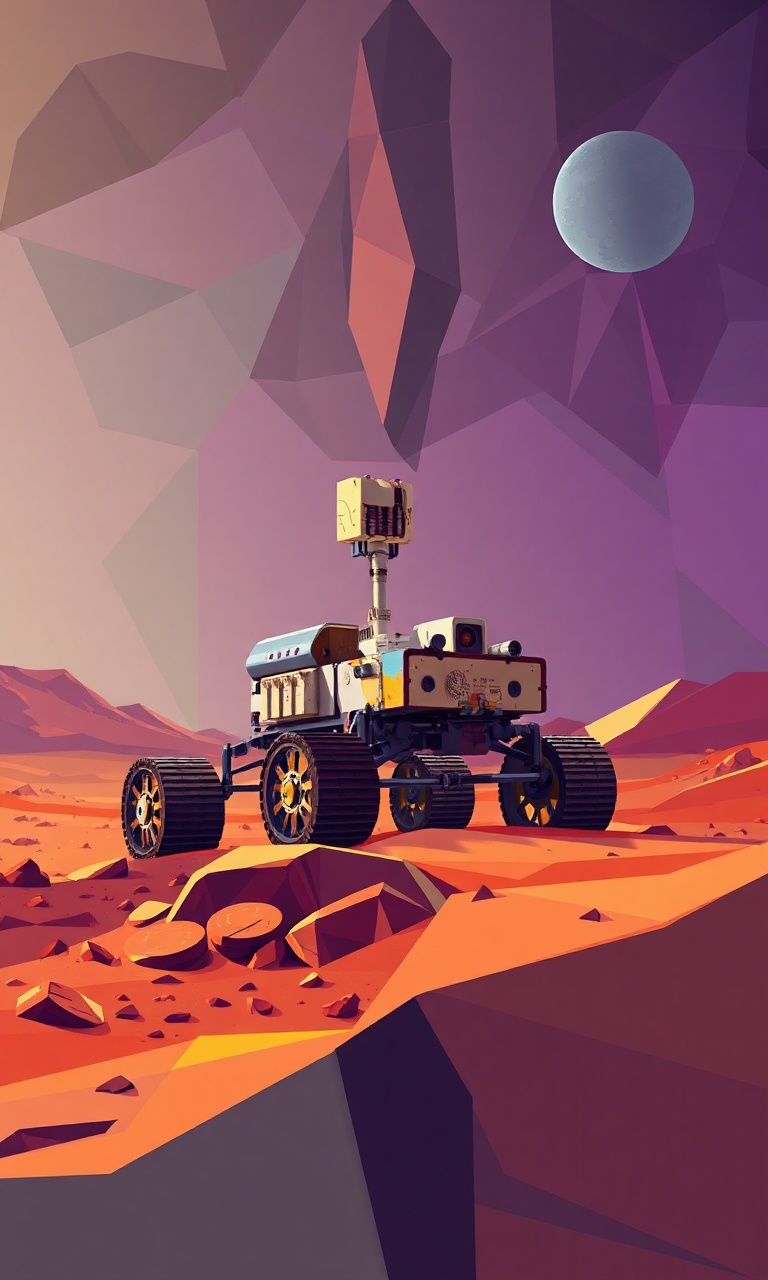
The Curiosity Rover, one of the most successful robotic missions to Mars, has been on a remarkable journey since its landing in August 2012. Equipped with state-of-the-art instruments and designed to explore the Martian surface, it has enabled numerous groundbreaking discoveries that have shed new light on the Red Planet’s history and potential for life.
On April 25, the Curiosity Rover successfully drilled into a Martian rock nicknamed “Atacama” as part of its ongoing mission to collect samples and conduct experiments. The sample collection process is a critical aspect of the rover’s objectives, as it aims to gather insights into Mars’ geological history and search for signs of past or present life on the planet.
When the rover retracted its robotic arm after drilling, however, the entire rock unexpectedly lifted off the Martian surface – an astonishing 28.6 pounds of it. This unexpected event was captured by the black-and-white obstacle-detection cameras mounted on the front of the rover’s chassis, which provided a clear sequence of images that allowed engineers to assess the situation and develop a plan to free the stuck rock.
While other Curiosity drilling operations have caused cracks or breaks in the upper layers of Martian rocks during the rover’s nearly 14-year mission, this is the first time one has remained stuck to the sleeve surrounding the drill’s rotating tip. Engineers initially attempted to remove the rock by vibrating the drill, but this approach proved ineffective.
On April 29, they adjusted the position of the robotic arm and tried vibration again, with only limited success in dislodging some sand from the rock’s surface. Undeterred, the team continued their efforts, attempting to loosen the rock further by tilting the drill more and rotating it at higher speeds. They expected that multiple attempts would be necessary to dislodge the rock, but instead, they made a surprising discovery.
On May 1, the team decided to take a different approach, spinning the drill bit while vibrating it. This unorthodox method proved effective, as the rock suddenly broke loose from its grasp on the Martian surface. The rover’s drill bit shattered into a multitude of pieces upon impact with the soil, but more importantly, the entire 28.6 pounds of rock was freed.
The incident highlights the complexity and precision required to operate such a sophisticated machine like the Curiosity Rover. Engineers must be prepared for a range of unexpected scenarios, from malfunctioning equipment to unpredictable geological events. The fact that they were able to devise an effective solution using their cameras’ footage and test multiple approaches underscores the ingenuity and expertise of NASA’s team.
The Curiosity Rover was designed to search for evidence of microbial life on Mars, and its discoveries have been instrumental in this quest. In 2020, it conducted an experiment within Gale Crater’s Glen Torridon region, a geological formation rich in clay minerals that strongly indicate the presence of water on Mars in the past. The rover collected samples using onboard instruments known as Sample Analysis on Mars (SAM), which analyzed chemical signatures and identified potential biosignatures.
The Martian environment is unforgiving, with temperatures ranging from -125°C to 20°C (-200°F to 70°F) and atmospheric pressure that is less than one percent of Earth’s. As such, the rover must be designed to withstand these harsh conditions, which can impact its performance and longevity. Despite these challenges, the Curiosity Rover has far exceeded expectations, providing a wealth of information about Mars’ geology, climate, and potential habitability.
The incident with the stuck drill is a testament to the rover’s resilience and adaptability in the face of technical issues. While it highlights the complexity of operating such sophisticated machines, it also underscores the expertise and ingenuity of NASA’s team. As they continue to explore Mars and push the boundaries of scientific knowledge, engineers will undoubtedly encounter new challenges and unexpected surprises – but with a strong foundation and a commitment to innovation, they can overcome even the most daunting obstacles.
The discovery is significant because it shows that, despite having been on Mars for almost 14 years, some things still surprise us. It highlights once again that robotic exploration of space is not without its challenges and, sometimes, unexpected surprises.