Terra Drone To Play Crucial Role In Boosting Japans Defense Capabilities With Cutting Edge Interceptor Drone
Terra Drone Selected for Japan’s ATLA Interceptor Drone Rapid Acquisition Program: A Major Milestone …
31. July 2026
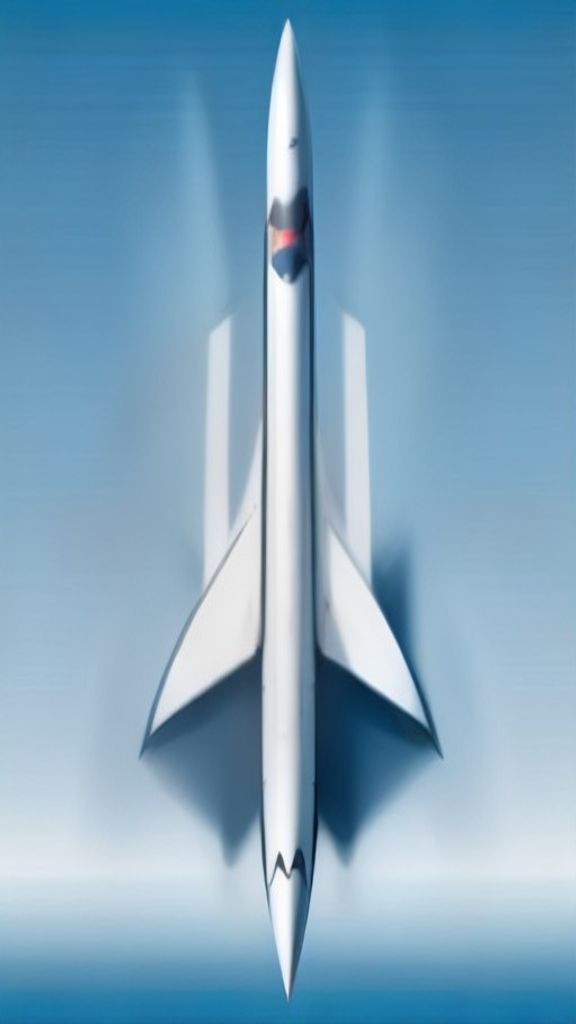
In a significant development that highlights Japan’s commitment to enhancing its defense capabilities, the country has recently conducted flight tests of the new air-launched variant of the upgraded Type 12 anti-ship missile. This latest addition to Japan’s arsenal boasts an impressive range of over 1,000 kilometers, marking a substantial improvement over existing models.
The Upgraded Type 12 Surface-to-Ship Missile (Air-Launched Variant: ALV) was first announced in fiscal year 2022 and is derived from the land-launched Type 25 Surface-to-Ship Missile. The development process has been ongoing for several years, with significant investments made by Japan to enhance its anti-ship capabilities.
The Japanese Air Self-Defense Force (JASDF) has chosen the F-2 fighter aircraft as the platform for testing the new missile. This decision is not surprising, given the F-2’s proven track record in combat and its extensive experience operating in a variety of environments. The JASDF’s decision to upgrade the F-2 fleet with the ALV will further solidify Japan’s airpower capabilities.
The Upgraded Type 12 SSM (ALV) features a low-observable design, which is intended to reduce the likelihood of detection by enemy radar systems. This design philosophy is consistent with Japan’s broader efforts to enhance its stealth capabilities. Additionally, the missile is equipped with an advanced satellite-based Up-to-Date Command (UTDC) capability, enabling the launch aircraft to transmit updated instructions, including changes to the designated target, after launch.
This new capability is expected to significantly improve the effectiveness of the ALV against moving warships. The ability to adjust targeting parameters mid-flight will allow Japan to adapt more rapidly to changing situations on the battlefield, making its anti-ship capabilities more formidable than ever before.
The range of the Upgraded Type 12 SSM (ALV) is arguably its most notable feature. While previous models had ranges of approximately 50 kilometers and 200 kilometers, respectively, this latest variant can reach targets at distances of up to 1,000 kilometers. This extended range has been achieved through a combination of increased fuel capacity, large wings, and an engine capable of operating effectively at high altitude.
To accommodate the new missile, the JASDF is implementing significant capability-enhancement modifications to its F-2 fleet. These upgrades will enable Japan’s airpower to operate more effectively in a variety of scenarios, from shallow water ambushes to deep-sea engagements. The service plans to begin deploying upgraded F-2 aircraft and the Upgraded Type 12 SSM (ALV) at Hyakuri Air Base in Ibaraki Prefecture in fiscal year 2027.
Japan’s development of long-range missiles is closely tied to its anti-ship defense strategy, which emphasizes the use of advanced sensors, command systems, and precision-guided munitions to deter an adversary from launching an invasion of Japan. The successful flight test of the Upgraded Type 12 SSM (ALV) marks a significant milestone in this effort.
To employ such long-range missiles effectively, however, Japan needs to continuously detect and track hostile warships operating thousands of kilometers away and provide sufficiently accurate targeting data to ensure successful engagement. This requires a coordinated effort between multiple platforms, including satellites, tactical unmanned aircraft, and target-observation missiles equipped with intelligence-gathering sensors.
Japan is rapidly developing a constellation of low-Earth orbit satellites designed to support its anti-ship missile capabilities. Additionally, the country is investing heavily in tactical unmanned aircraft that can penetrate an adversary’s threat envelope and collect critical intelligence. A target-observation missile based on the Upgraded Type 12 SSM and equipped with intelligence-gathering sensors will also play a key role in enhancing Japan’s reconnaissance, surveillance, and targeting capabilities.
Only when these reconnaissance, surveillance, and targeting capabilities are fully established will the Upgraded Type 12 SSM be able to demonstrate its full operational potential. The successful flight test of this new missile marks an important step toward realizing Japan’s vision for a robust and effective anti-ship defense system.
This new capability is expected to significantly improve the effectiveness of the ALV against moving warships. The ability to adjust targeting parameters mid-flight will allow Japan to adapt more rapidly to changing situations on the battlefield, making its anti-ship capabilities more formidable than ever before.
The Upgraded Type 12 SSM (ALV) features a low-observable design, which is intended to reduce the likelihood of detection by enemy radar systems. This design philosophy is consistent with Japan’s broader efforts to enhance its stealth capabilities. Additionally, the missile is equipped with an advanced satellite-based Up-to-Date Command (UTDC) capability, enabling the launch aircraft to transmit updated instructions, including changes to the designated target, after launch.
To accommodate the new missile, the JASDF is implementing significant capability-enhancement modifications to its F-2 fleet. These upgrades will enable Japan’s airpower to operate more effectively in a variety of scenarios, from shallow water ambushes to deep-sea engagements. The service plans to begin deploying upgraded F-2 aircraft and the Upgraded Type 12 SSM (ALV) at Hyakuri Air Base in Ibaraki Prefecture in fiscal year 2027.
Japan’s development of long-range missiles is closely tied to its anti-ship defense strategy, which emphasizes the use of advanced sensors, command systems, and precision-guided munitions to deter an adversary from launching an invasion of Japan. The successful flight test of the Upgraded Type 12 SSM (ALV) marks a significant milestone in this effort.
To employ such long-range missiles effectively, however, Japan needs to continuously detect and track hostile warships operating thousands of kilometers away and provide sufficiently accurate targeting data to ensure successful engagement. This requires a coordinated effort between multiple platforms, including satellites, tactical unmanned aircraft, and target-observation missiles equipped with intelligence-gathering sensors.
Japan is rapidly developing a constellation of low-Earth orbit satellites designed to support its anti-ship missile capabilities. Additionally, the country is investing heavily in tactical unmanned aircraft that can penetrate an adversary’s threat envelope and collect critical intelligence. A target-observation missile based on the Upgraded Type 12 SSM and equipped with intelligence-gathering sensors will also play a key role in enhancing Japan’s reconnaissance, surveillance, and targeting capabilities.
Only when these reconnaissance, surveillance, and targeting capabilities are fully established will the Upgraded Type 12 SSM be able to demonstrate its full operational potential. The successful flight test of this new missile marks an important step toward realizing Japan’s vision for a robust and effective anti-ship defense system.
In a significant development that highlights Japan’s commitment to enhancing its defense capabilities, the country has recently conducted flight tests of the new air-launched variant of the upgraded Type 12 anti-ship missile. This latest addition to Japan’s arsenal boasts an impressive range of over 1,000 kilometers, marking a substantial improvement over existing models.
The Upgraded Type 12 Surface-to-Ship Missile (Air-Launched Variant: ALV) was first announced in fiscal year 2022 and is derived from the land-launched Type 25 Surface-to-Ship Missile. The development process has been ongoing for several years, with significant investments made by Japan to enhance its anti-ship capabilities.
The Japanese Air Self-Defense Force (JASDF) has chosen the F-2 fighter aircraft as the platform for testing the new missile. This decision is not surprising, given the F-2’s proven track record in combat and its extensive experience operating in a variety of environments. The JASDF’s decision to upgrade the F-2 fleet with the ALV will further solidify Japan’s airpower capabilities.
The Upgraded Type 12 SSM (ALV) features a low-observable design, which is intended to reduce the likelihood of detection by enemy radar systems. This design philosophy is consistent with Japan’s broader efforts to enhance its stealth capabilities. Additionally, the missile is equipped with an advanced satellite-based Up-to-Date Command (UTDC) capability, enabling the launch aircraft to transmit updated instructions, including changes to the designated target, after launch.
This new capability is expected to significantly improve the effectiveness of the ALV against moving warships. The ability to adjust targeting parameters mid-flight will allow Japan to adapt more rapidly to changing situations on the battlefield, making its anti-ship capabilities more formidable than ever before.
The range of the Upgraded Type 12 SSM (ALV) is arguably its most notable feature. While previous models had ranges of approximately 50 kilometers and 200 kilometers, respectively, this latest variant can reach targets at distances of up to 1,000 kilometers. This extended range has been achieved through a combination of increased fuel capacity, large wings, and an engine capable of operating effectively at high altitude.
To accommodate the new missile, the JASDF is implementing significant capability-enhancement modifications to its F-2 fleet. These upgrades will enable Japan’s airpower to operate more effectively in a variety of scenarios, from shallow water ambushes to deep-sea engagements. The service plans to begin deploying upgraded F-2 aircraft and the Upgraded Type 12 SSM (ALV) at Hyakuri Air Base in Ibaraki Prefecture in fiscal year 2027.
The successful flight test of the Upgraded Type 12 SSM (ALV) marks a significant milestone in Japan’s anti-ship missile development program. The new missile will become a central component of Japan’s stand-off defense capabilities, designed to deter an adversary from launching an invasion of Japan by deploying long-range missiles capable of striking targets from beyond the effective reach of hostile air-defense systems.
To employ such long-range missiles effectively, however, Japan needs to continuously detect and track hostile warships operating thousands of kilometers away and provide sufficiently accurate targeting data to ensure successful engagement. This requires a coordinated effort between multiple platforms, including satellites, tactical unmanned aircraft, and target-observation missiles equipped with intelligence-gathering sensors.
Japan is rapidly developing a constellation of low-Earth orbit satellites designed to support its anti-ship missile capabilities. Additionally, the country is investing heavily in tactical unmanned aircraft that can penetrate an adversary’s threat envelope and collect critical intelligence. A target-observation missile based on the Upgraded Type 12 SSM and equipped with intelligence-gathering sensors will also play a key role in enhancing Japan’s reconnaissance, surveillance, and targeting capabilities.
Only when these reconnaissance, surveillance, and targeting capabilities are fully established will the Upgraded Type 12 SSM be able to demonstrate its full operational potential. The successful flight test of this new missile marks an important step toward realizing Japan’s vision for a robust and effective anti-ship defense system.